Jonathan's Body Shop earned Tesla Approved Body Shop (TABS) designation through a three-deliverable engagement: brand identity, web design, and a communications campaign aligned to manufacturer standards. The shop already had the operational reality. We built the brand layer the application required.
Tesla's Approved Body Shop program is closed by design. The manufacturer evaluates a finite set of facilities per metro and routes its own customers to the approved network. For a collision center, getting in changes the economics of the business: the customer category is captive, the work is high-margin, and the referrals are manufacturer-issued rather than acquired.
For an independent shop in Miami — one of the densest Tesla markets in the United States — the cost of being outside the network is not abstract. It is every Model S, Model 3, Model X, and Model Y collision in the metro that is routed elsewhere by default.
The operational reality was not the question.
Jonathan's Body Shop arrived at the engagement with the infrastructure TABS technical inspectors look for. A 15,000 square-foot facility on NW 54th Street. Six dedicated workstations. The AkzoNobel coating system. I-CAR Gold Class certification. Technicians dual-trained in Aluminum GMA (MIG) and Steel GMA welding — Tesla's specific requirement for body panel work on aerospace-grade aluminum chassis.
By the standards of the program, the facility exceeded the welding headcount minimum and held current I-CAR credentials renewed on the three-year recertification cycle TABS specifies. The technical audit was not the risk.
What Tesla evaluates beyond the technical audit.
Manufacturer certification programs are technical reviews. They are also brand reviews. A facility being considered for a manufacturer-routed network is being evaluated on whether its public-facing presentation reads as a peer to the manufacturer's own customer-facing standards — or as a regional repair garage that happens to have the right equipment.
A shop with every welding certificate in the industry can lose an application because the brand identity, the web presence, and the customer-facing communications signal the wrong category. That was the gap, and it is the gap we were brought in to close before submission.
The work.
01
Brand identity.
A new visual system that matched the standard inside the facility. Logo treatment rebuilt from the existing mark, refined typographic hierarchy, a disciplined color system, and a photography direction that documented the workstations and the technicians as the proof they already were. The brand stopped looking like a regional collision shop and started looking like an authorized service partner.
02
Web design.
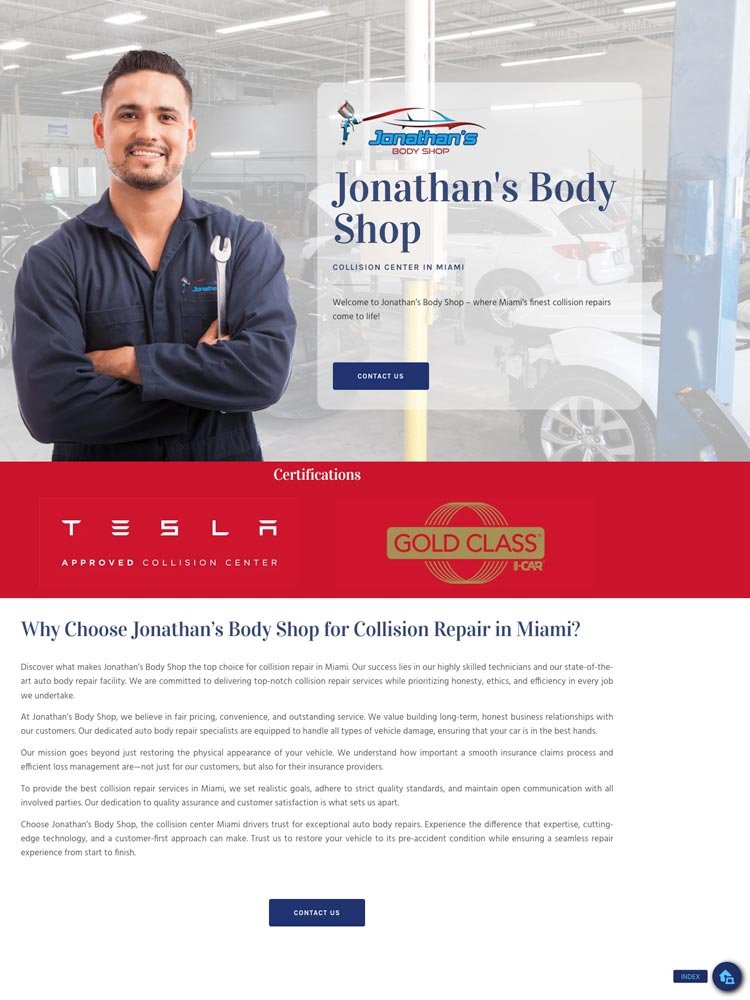
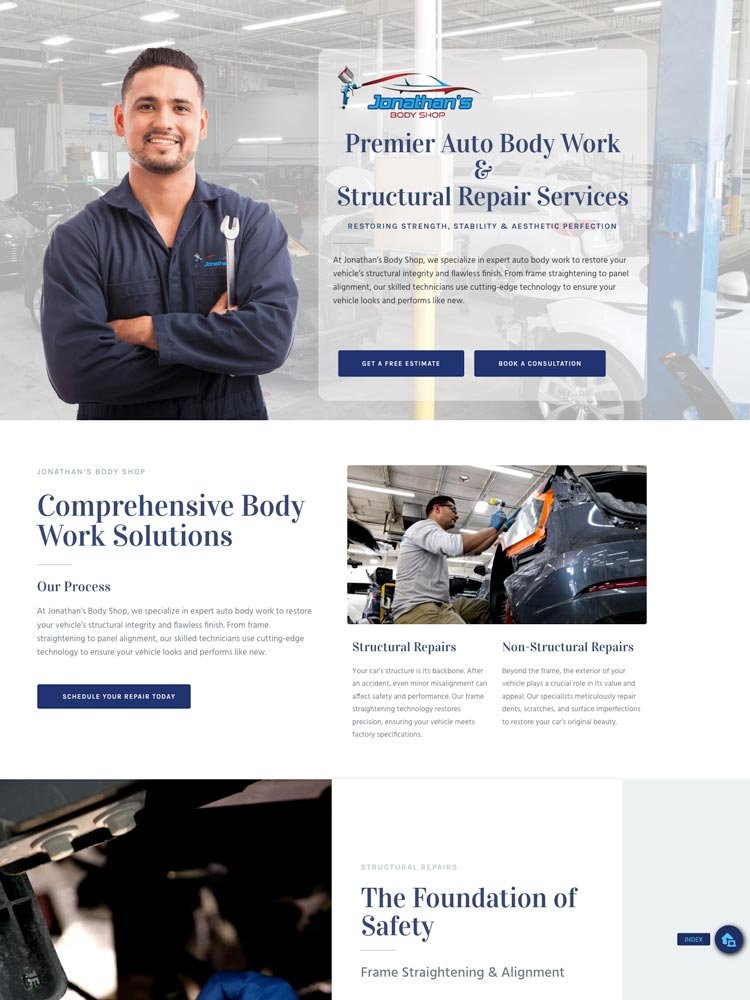
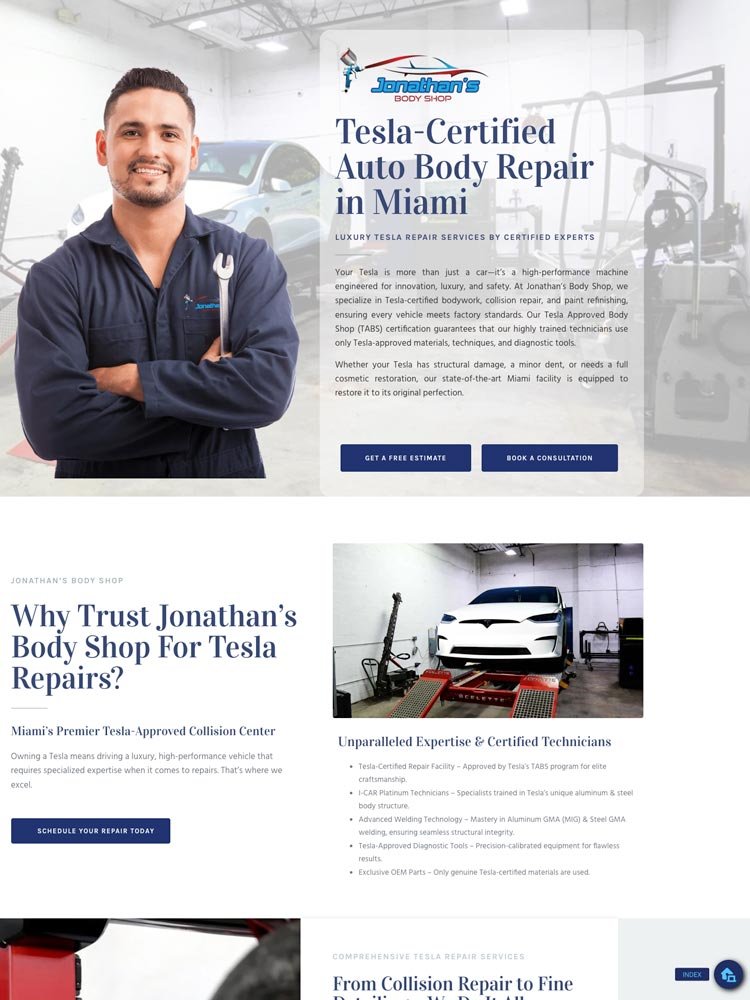
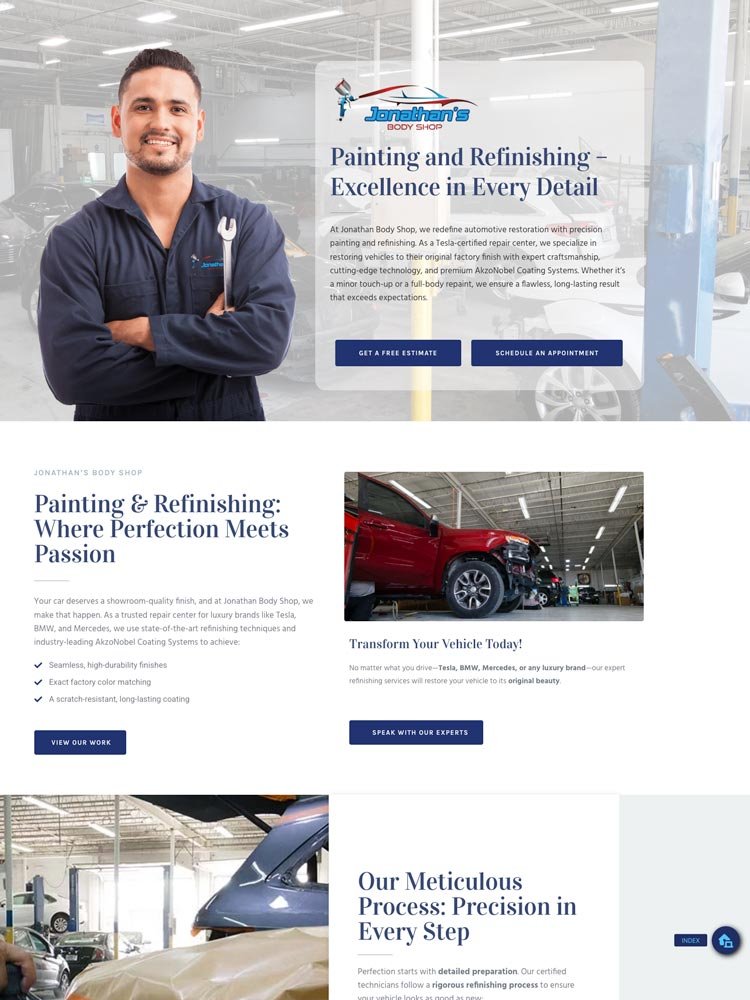
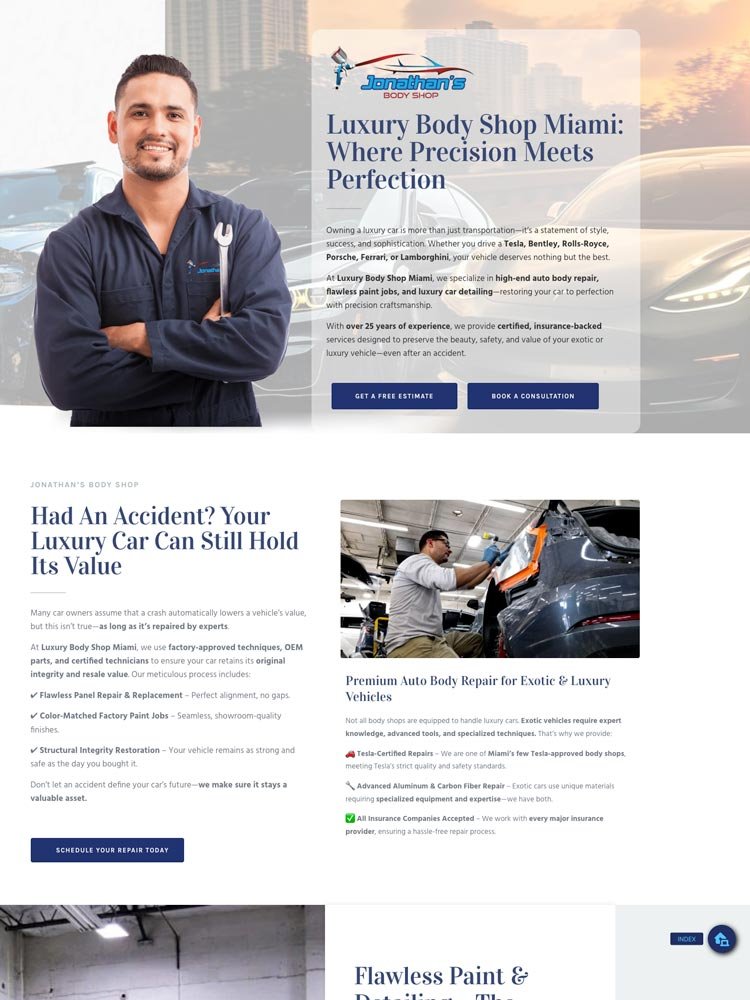
A new collision-center site engineered to read as a peer to manufacturer-grade interfaces. Clean information architecture that surfaced the certifications, the welding capabilities, the AkzoNobel system, the workstation count, and the insurance partnerships without burying them in stock copy. Service pages structured so a Tesla program reviewer could find what they needed in a single scroll. A dedicated Tesla services page that anchored the application narrative on the public web.
03
Communications campaign.
The positioning and supporting materials that surrounded the TABS submission. Application narrative, credential documentation, customer-experience messaging, and the public-facing announcements that signaled the shop's intent and readiness to the manufacturer and to the local Tesla owner community. Communications were sequenced so the brand arrived at Tesla's review desk fully assembled, not in pieces.
01/05
FIG. ML·05 — Web design layer · the redesigned jonathanbodyshop.com, five-page walkthrough.
The outcome.
Tesla Approved Body Shop designation, month three of the engagement. The shop entered the manufacturer-routed network for the Miami metro and gained access to a customer category that was structurally closed before the certification.
The certification is not the point — the access is. A TABS-approved shop is the default routing for Tesla's owner support in the metro for the duration of the certification cycle, with recertification tied to the I-CAR three-year welding credential renewal. The economics of the business changed at the moment the designation was granted.
Manufacturer certifications are technical audits. They are also brand audits. A shop with the operational reality already in place still loses applications when the brand and communications layer does not reflect it. The work is to close that gap before submission, not after rejection.
Ferminius
If your application is held back by the brand layer
That's the work. Three active clients per quarter. One operator, one accountable name.